Molecules, Movement, and Motors
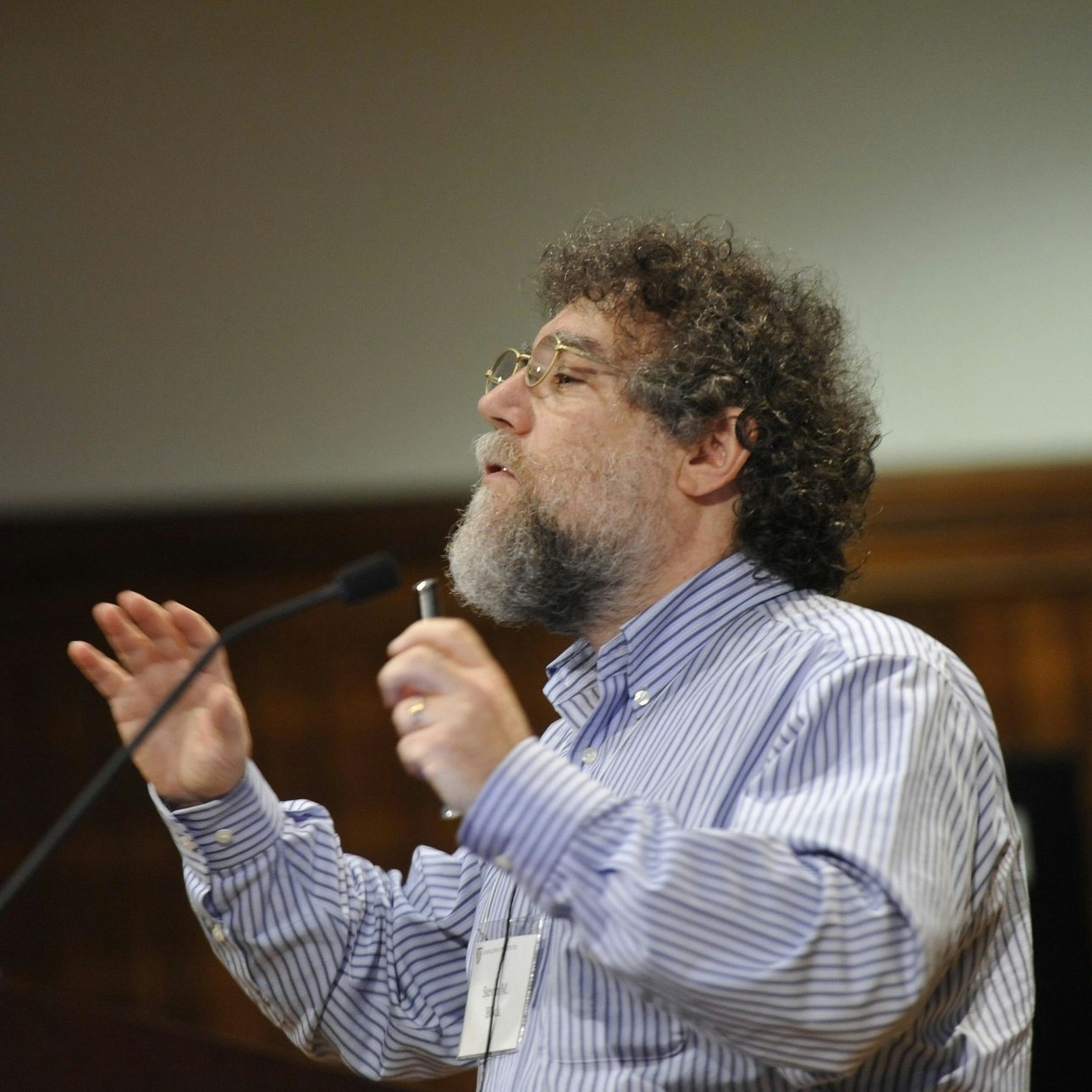
The symposium brings together experts in genetics, chemistry, biology, physics, medicine, and engineering to discuss the mechanics of motors—from naturally occurring motors, such as those inside cells, to new synthetic motors made from DNA. The exploration about how motors work and what we can learn from studying them will address an array of questions: Are motors specific for a single task, or can they adapt to multiple functions? What makes motors start and stop moving? What are common features that make an effective motor? How can we build on new understandings of motors to cure disease and make other improvements to human life?
Event Videos

Welcoming Remarks
Welcoming remarks by Lizabeth Cohen (Radcliffe Institute for Advanced Study and Harvard University) and Rosalind Segal (Radcliffe Institute for Advanced Study and Harvard University)
"What Happens When Proteins and Their Junctions Are Pulled upon by Motors?" by Viola Vogel (Eidgenössische Technische Hochschule Zürich), introduced by Joanna Aizenberg (Radcliffe Institute for Advanced Study and Harvard University)
"Designing Intelligent Nano/Microbots" by Ayusman Sen (Pennsylvania State University), introduced by Judith Steen (Children's Hospital Boston)

James Spudich and Susan K. Dutcher
"The Molecular Basis of Human Hypertrophic and Dilated Cardiomyopathies" by James Spudich (Stanford University), introduced by Thomas Schwarz (Children's Hospital Boston)
"Movement and Motility of the Eukaryotic Cilium" by Susan K. Dutcher (Washington University in St. Louis), introduced by Rosalind Segal (Radcliffe Institute for Advanced Study and Harvard University)

Anna C. Balazs and Larry S.B. Goldstein
"Using Chemical Gradients as Motors to Propel Biomimetic Cells and Worms" by Anna C. Balazs (University of Pittsburgh), introduced by Dimitar Sasselov (Radcliffe Institute for Advanced Study and Harvard University)
"Molecular Motors in Axonal Transport" by Larry S.B. Goldstein (University of California at San Diego and Howard Hughes Medical Institute), introduced by Elizabeth Engle (Children's Hospital Boston and Howard Hughes Medical Institute)

Steven M. Block and Closing Remarks
"Shedding Light on Motor Function, One Molecule at a Time" by Steven M. Block (Stanford University), introduced by Joan Ruderman (Radcliffe Institute for Advanced Study and Harvard University)
Closing remarks by Samara Reck-Peterson (Harvard Medical School)